
Europe Day – a moment to reflect on EUROWA’s achievements
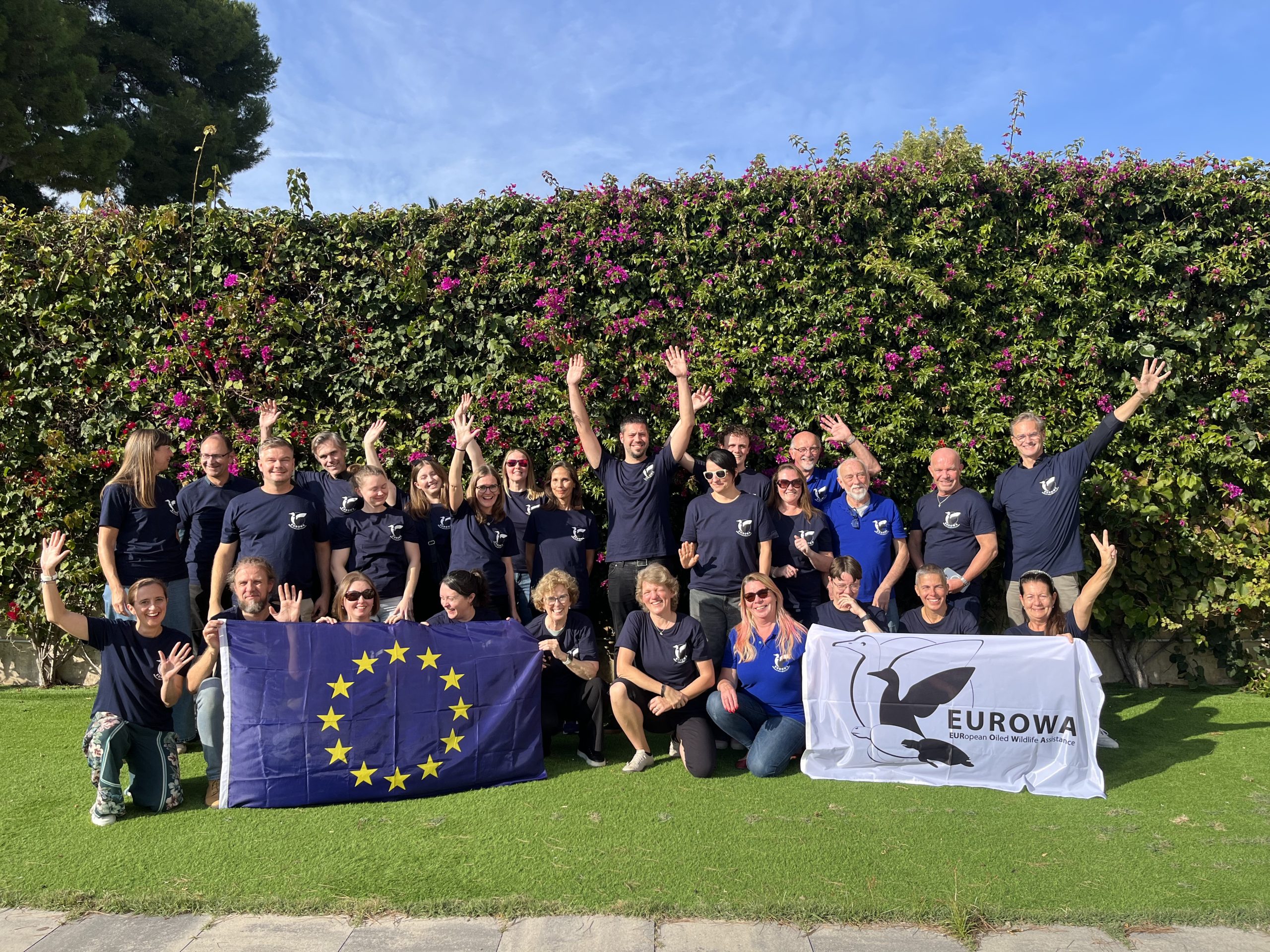
This Europe Day, the EUROWA Network is taking a look back at our many years of collaboration with the European Commission and how their support has enabled our Network to thrive.
For many years, European oiled wildlife responders had been collaborating during major incidents, such as the Erika, the Prestige, the Tricolor and the Full City amongst others. The idea was born to create a formal, structured network based on shared best practices and mutual assistance in Europe amongst these responders. The work began.
While there were many important steps and projects along the way, one of the first major milestones was the Preparedness for Oil-polluted shoreline cleanup and oiled wildlife interventions (POSOW) project running from 2012-2013. The project was funded by the then EU Civil Protection Financial Instrument and aimed to enhance knowledge and capacities of professionals and volunteers in the field of marine pollution. Crucially, this project facilitated the development and publication of the first Oiled Wildlife Response Manual which is still part of the EUROWA Handbooks and best practices series.
The next major milestone was the European Oiled Wildlife Assistance (EUROWA) project which was the official founding of our Network from 2015 – 2016. Thanks to the funding from the European Commission’s Civil Protection Mechanism, a team of oiled wildlife response experts and a stockpile of critical equipment were established. Both of which can be rapidly mobilised by European governments in the event of an oil spill. The project developed a Standard Operating Procedure (SOP), a series of Guidelines and a portfolio of centralised training packages that would enable wildlife response experts from any Member State to become qualified. It created a professional structure for leading NGOs in Europe to be trained, with the possibility to scale up a local incident up to international level via mobilising trained capabilities from the EUROWA network.
In 2018 this system was put to the test during the Bow Jubail incident in Rotterdam. A chemical tanker collided with a jetty, leading to 230 metric tons of fuel oil spilling and the oiling of over 500 mute swans. 18 experts were brought from five European countries, as well as 5 experts from United States and Brazil. Together with their Dutch colleagues from SON-Respons, they blended as a team to lead and run the temporary centre, with its large number of volunteers, for a full month. The oiled mute swans were treated according to the EUROWA protocols and the various practical guidelines that were developed under the EUROWA project mentioned above. It was fundamental to the success – 509 swans were successfully released.
From 2021 – 2023, EUROWA received yet another boost through further funding from the Civil Protection Mechanism for EUROWA-2. Following on from the first project, we strengthened the network cooperation, created educational tools for governments and network members, enlarged the EUROWA training portfolio as well as developed a new branch for sea turtle emergency response with their own protocols and training modules.
Once again in 2024, the EUROWA Network was supported through the European Oiled Wildlife response Life-long learning Development (EUROWILD) project which received funding from the EU’s Erasmus Plus Programme. While still ongoing today, we are currently expanding the work of our network with new training courses, technical meetings for the network and engaging with authorities on preparedness. Read more about our ongoing project here.
EUROWA has had many successes over the years, with plenty more to do to improve oiled wildlife preparedness and response. We would like to thank the European Commission for more than a decade of support and we look forward to many more years of collaboration.
Related News